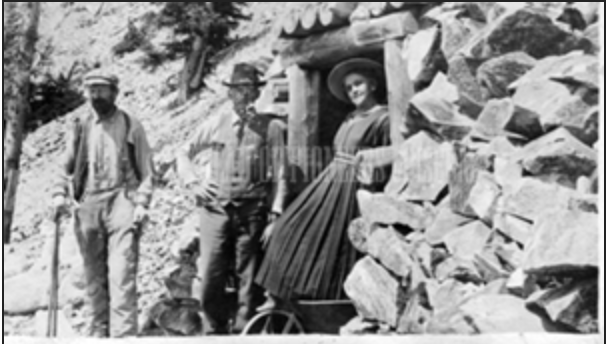
Uranium was discovered in the Fish Creek Canyon in 1952. The uranium bearing zones were between 1-20 feet long and 1000 feet in depth and contained about 0.3% uranium. Although the area is no longer mined, the USGS cites abnormal radioactivity in a half mile radius from the original site. Uranium is still mined globally today and in a recent report the U.S. Atomic Energy Commission advocates for additional prospecting in their 2010 report of the area, as few sites have been examined in detail.
Uranium became a highly lucrative element with the discovery of its role in nuclear weapons development. Routt County was not a part of South West Colorado’s Uravan Mineral Belt, which held dense uranium deposits, but it did participate in the federal government’s mining program during the Cold War. In 1948, the federal government encouraged citizens in rural areas to build roads into remote places rich in radioactive ore.
Upon discovery in 1947, Fish Creek Canyon became a short lived host for this endeavor. The Steamboat Pilot called Uranium “the most sought after and valuable metal in the world.” Unlike the coal mine industries in outside of the town of Steamboat Springs, the uranium industry was unsustainable.
Today the uranium mine is boarded up due to potential radioactive exposure and a sensitive bat habitat, but hikers can view the stalagmites and pools of ice through the grate. The rusted track used for transporting mined material is buried beneath tree roots and soil, but uproots in the small opening of the work area. In the sixty years since the mine has been fully operable, the remnants have almost entirely disappeared. The short-lived uranium economy in Steamboat Springs was just one example of the geological natural resources in the valley.

Although uranium mining hosts a wealth of health risks for miners, the mine closed down before the effects could harm the community in any significant way. The City of Steamboat’s water source is over a mile away from the original mine site, and The USGS monitors the quality of the water to ensure there is no radioactive material.
Now the “Uranium Trail”, which was an old Jeep Road for the mine site, is one of the valley’s most popular hikes. This connects to the rise of recreation in the Fish Creek Canyon and the role of the United States Forest Service in the land’s management, which will be covered in the next blog post.
References:
Beroni, E. P. (Ernest Pete), 1919-2001. Reconnaissance for Uraniferous Rocks in Northwestern Colorado, Southwestern Wyoming, and Northeastern Utah. Oak Ridge, Tennessee: U.S. Atomic Energy Commission, Technical Information Service, 1952.
“Uranium Deposit Reported Found in Routt County,” The Steamboat Pilot, October 16, 1947, https://www.coloradohistoricnewspapers.org/?a=d&d=STP19471016.2.3&srpos=6&e=——-en-20–1–img-txIN%7ctxCO%7ctxTA-uranium——-0-Routt-.
 Fish Creek Basin